


For this post, we’re going to shift gears a little and talk about the miracles lying right in our own backyard. During a recent hike near Colorado National Monument, my family and I noted five plant species with disease-fighting potential. These plants have been used by many generations of indigenous peoples and settlers and still have application as herbal medicines today. Given the scarcity of greenery in our high, dry locale, it’s incredible to think how resourceful our forebears were. It also makes me wonder what is yet to be discovered in the world of natural medicine. So, we’re going to explore some common flora you might add to your medical kit. Grab a backpack and water bottle (it’s hot out there!) and get ready to absorb some plant medicine knowledge!
(Disclaimer: I am not an herbal medicine expert and do not endorse any of the following for treatment of medical conditions. I am also not offering any advice on how to prepare herbs for medical uses, though that may come later. Having said that, I am fascinated by ingenuity, minimalism, and proficiency. I also love the concept of taking medical knowledge out of the clinic space and into the world, which is perfectly demonstrated in wilderness medicine. Besides, who doesn’t want to channel their inner Neville Longbottom, the real hero of the Harry Potter series?)
Juniper

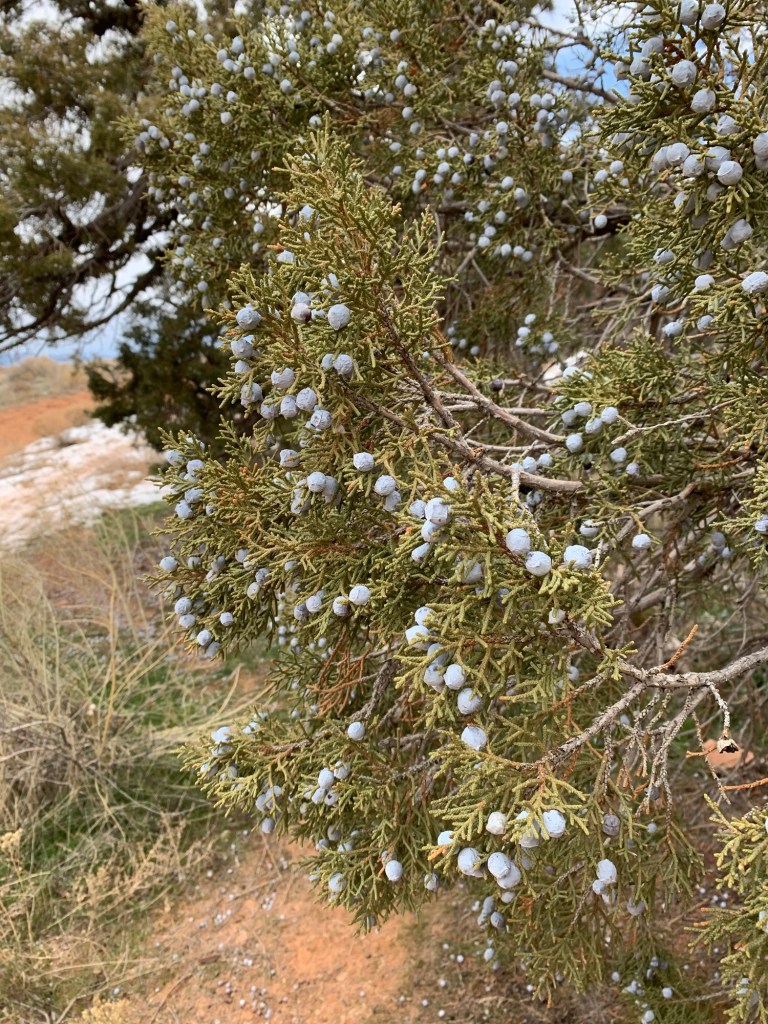
This hardy, broad tree/shrub is found in high deserts throughout the West. It is best recognized by thick, rubbery, branching needles and an abundance of woody blue berries. Though tempting, please do not eat the berries right off the tree. They can cause stomach upset, nausea, and diarrhea. However, my cowboy dad told me stories of popping a few in his mouth to stimulate saliva production and combat thirst while moving cattle in the Arizona heat. (He just didn’t swallow.) Despite their tendency to cause tummy troubles, the berries are the part most frequently utilized for medicine. When crushed, they release chemicals that have antimicrobial and anti-diabetic properties. They also stimulate urination, which may improve symptoms of urinary tract infections. The needles can be boiled and the steam inhaled to clear sinus congestion. (https://pmc.ncbi.nlm.nih.gov/articles/PMC6726717/)
Rabbitbrush
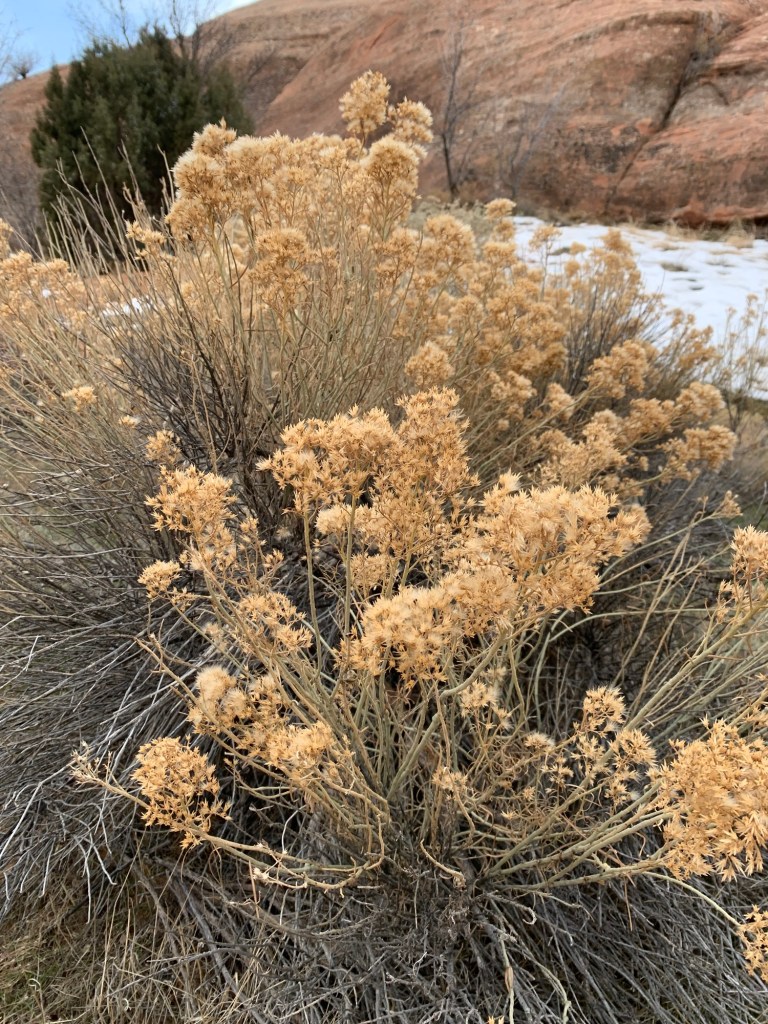
Although the species name “nauseosa” leaves a bad taste in one’s mouth (and strange smell in one’s nostrils), rabbitbrush is a versatile shrub with many applications. Its primary use by Native Americans was to crush the flowers to create a yellow dye, but it also found its way into medicinal teas. Currently, it is being studied for chemicals that combat parasites and repel insects. Outside of medicine, it is a promising source of domestic rubber production. (https://www.fs.usda.gov/wildflowers/plant-of-the-week/ericameria_nauseosa.shtml)
Mormon Tea (Ephedra nevadensis)
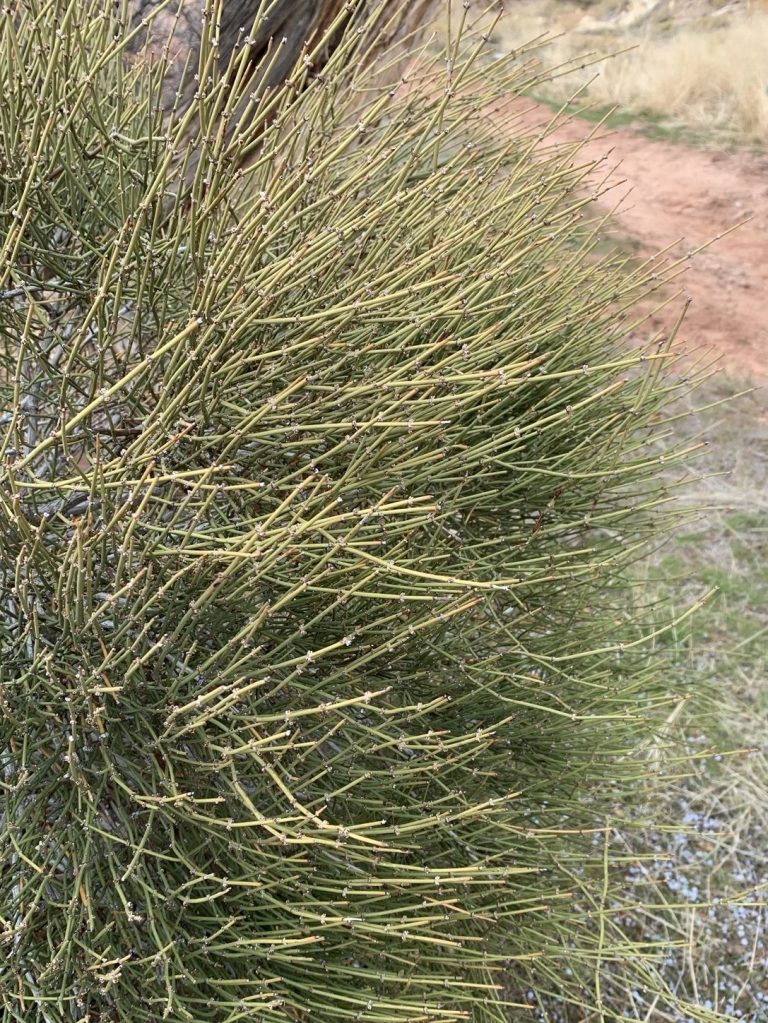
The mid-1800s found the Latter-day Saints sipping from steaming tin cups as they traversed the high plains and trekked to Utah. Their choice of brew was inspired: Ephedra is one of the most widely used medicinal herbs in the country. It contains an ephedrine-like substance good for clearing mucus passages, which improves cough and cold symptoms. Dried branches are boiled and steeped to make a warming tea. The thin, waxy, septated sprigs put one in mind of a watery world, but it is well-suited to a dry climate. (https://www.webmd.com/vitamins/ai/ingredientmono-569/mormon-tea)
Yucca
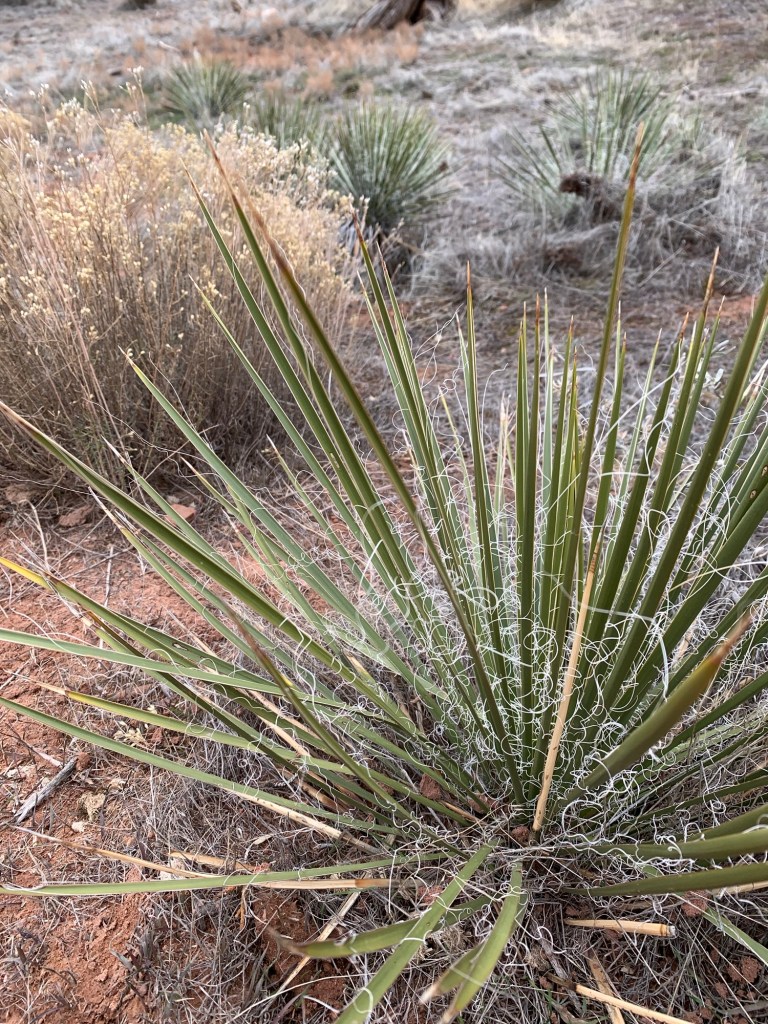
Yucca is an easily recognized short shrub. Its long, spiky leaves have a host of uses. Native tribes utilized the fibers for clothing, shoes, baskets, and housing. But its hidden value lies in its abundance of phytochemicals, compounds with anti-inflammatory and antioxidant properties. These are found in many fruits and vegetables and can decrease arthritic pain, protect from UV radiation, lower blood sugar, and regrow hair. They even play a role in reducing the risk of Alzheimer’s and Parkinson’s disease. Yucca is truly a superplant! (https://pmc.ncbi.nlm.nih.gov/articles/PMC10044844/)
Piñon Pine
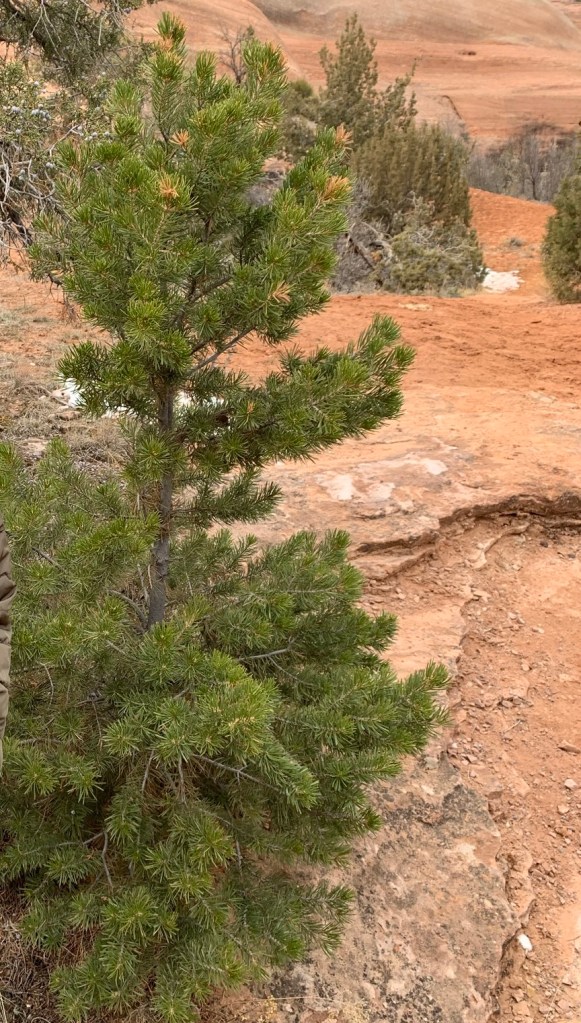
Honestly, it is difficult to tell the story of the West without including the piñon pine. Countless native peoples and pioneers have benefited from its wood for fuel; sap for pottery, paint, and jewels; and nuts for food. As a medicinal plant, the resin can be applied to cuts, burns, or other skin conditions. The needles can be processed in a variety of ways to induce vomiting, treat sexually transmitted infections, and relieve cold symptoms. The inner bark can also be used as an expectorant for cough. (https://www.uvu.edu/crfs/native-plants/pinus-edulis.html)
For more information on these and other medicinal plants, I recommend visiting the U.S. Department of Agriculture website (www.usda.gov). I also find Sam Coffman’s book Herbal Medic: A Green Beret’s Guide to Emergency Medical Preparedness and Natural First Aid (Storey Publishing, LLC; 2021) a handy resource.






 Medical Miracles
Leave a comment